
Few things rattle a homeowner faster than stepping into a room and finding standing water on the floor. Whether it’s a burst pipe, a storm surge from a summer squall, or an overflowing appliance, that first moment of panic is usually followed by the same question: what happens now?
If you’re facing water damage restoration in Port St. Lucie for the first time, knowing what the process actually looks like can take a lot of the stress out of a bad situation. Restoration isn’t a single job – it’s a sequence of steps, each one building on the last, designed to stop the damage, dry out your property, and bring your home back to normal as quickly and safely as possible.
Here’s a realistic, start-to-finish look at what to expect.
Step 1: The Emergency Call and First Response
The clock starts the moment water hits your floors, walls, or ceiling. Within the first 24–48 hours, water spreads into porous materials like drywall, subflooring, and insulation, and the risk of mold growth begins to climb fast – especially in Florida’s humid climate.
That’s why the first step is always the same: call a restoration company that offers true 24/7 emergency response. A reputable team should be able to reach your property in Port St. Lucie within 30 to 60 minutes of your call. During this initial contact, expect the technician to ask a few quick questions — the source of the water, how long it’s been sitting, and whether it’s clean water, gray water, or contaminated (black) water. This helps the crew arrive prepared with the right equipment for your specific situation, whether that’s a flooded basement, a burst pipe, or a sewage backup.
Step 2: Inspection and Damage Assessment
Once the crew arrives, the real work begins with a thorough water damage inspection. This isn’t just a quick walk-through – technicians use moisture meters, thermal imaging cameras, and hygrometers to map exactly where water has traveled, including areas that aren’t visible to the naked eye, like inside walls, under flooring, or above ceilings.
This step matters more than most homeowners realize. Water is sneaky. It wicks upward through drywall, seeps into subfloors, and pools in crawlspaces long after the surface appears dry. A proper inspection identifies the full scope of the damage so nothing gets missed – because any moisture left behind becomes a mold problem within days.
At this stage, your restoration team should also document everything with photos and written notes. This documentation becomes essential later if you’re filing an insurance claim.
Step 3: Water Extraction and Removal
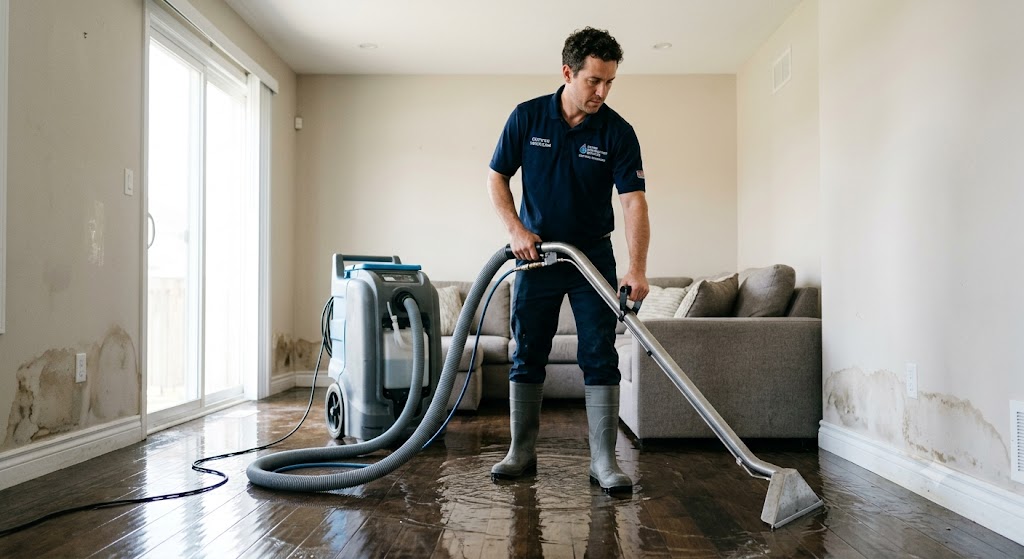
With the assessment complete, crews move into active water extraction. Industrial-grade pumps and truck-mounted or portable extraction units remove standing water quickly, minimizing how long your floors, furniture, and walls sit saturated.
For larger events – think flood damage cleanup after heavy Florida rains – this step can take several hours depending on the volume of water and the size of the affected area. Carpets, padding, and any materials too saturated to save are typically removed at this stage to prevent them from becoming a breeding ground for bacteria and mold.
If the water involved is contaminated — from a sewage backup or storm flooding – this is also when technicians begin sanitizing surfaces to reduce health risks before drying begins.
Step 4: Drying and Dehumidification
This is where the process really separates professional restoration from a DIY mop-and-fan job. Even after visible water is gone, materials like drywall, wood framing, and subfloors can retain significant moisture. Left untreated, that trapped moisture leads to warping, structural weakening, and mold within 24 to 72 hours.
Professional crews use industrial air movers and commercial dehumidifiers to pull moisture out of the air and out of building materials simultaneously. This is part of a broader structural drying and dehumidification process, and it’s typically the longest phase of the job – often running for three to five days depending on how much moisture was absorbed and how humid conditions are outside.
Throughout this stage, technicians return periodically to take moisture readings and confirm that walls, floors, and framing are drying at the expected rate. Drying isn’t considered complete until moisture levels match the dry standard for that type of material – not just until things “look” dry.
Step 5: Cleaning, Sanitizing, and Mold Prevention
Once everything is fully dry, attention shifts to cleaning and sanitizing every surface that was affected. This includes antimicrobial treatments to prevent mold growth, deodorizing to eliminate musty odors, and cleaning any salvageable belongings, furniture, or flooring.
Given how quickly mold can take hold in Florida’s climate, many restoration companies build mold remediation checks directly into this stage – even if no visible mold is present yet. Catching early spore growth here can save homeowners from a much bigger, costlier mold problem down the road.
Step 6: Repairs and Reconstruction
With the property clean, dry, and sanitized, the final phase is putting things back together. Depending on the extent of the damage, this can range from minor patchwork to a full rebuild of affected areas. Common repairs at this stage include:
- Drywall water damage repair
- Water-damaged flooring removal and replacement
- Ceiling repairs where water intrusion caused staining or structural weakening
- Repainting, trim work, and cosmetic finishing
A good restoration company handles this reconstruction phase in-house or through trusted partners, so you’re not left coordinating separate contractors on top of everything else. The goal is to return your property to its pre-damage condition – not just functional, but looking like the incident never happened.
Step 7: Final Walkthrough and Insurance Support
Before the job is considered complete, expect a final walkthrough with your restoration team. This is your chance to ask questions, confirm every affected area has been addressed, and review the documentation that was collected throughout the process.
If you’re working with an insurance company, this documentation – moisture readings, photos, drying logs, and repair records – becomes critical to supporting your claim. Many local restoration companies work directly with insurance adjusters and can help streamline this part of the process, which is often the most frustrating part for homeowners dealing with water damage for the first time.
What Affects the Timeline?
Every water damage situation is different, but a few factors consistently influence how long the full process takes:
- Source of the water – clean water from a supply line dries faster than contaminated water from sewage or flooding
- Size of the affected area – a single bathroom versus an entire flooded basement changes everything
- How long water sat before extraction began – this is why fast response time matters so much
- Materials involved – hardwood, drywall, and insulation all dry at different rates
- Humidity and weather conditions – Port St. Lucie’s climate can slow drying times if not managed with the right equipment
A minor leak might be resolved in two to three days. A major flood affecting multiple rooms can take one to two weeks from first call to final repair.
Why Local Experience Matters
Port St. Lucie’s mix of heavy seasonal rain, hurricane exposure, and high humidity creates restoration challenges that differ from drier climates. A team that regularly works throughout Port St. Lucie and the surrounding communities understands how local weather patterns, soil conditions, and building materials affect drying times and mold risk – knowledge that generic national chains often don’t have.
Ready to Get Started?
If water damage has hit your home or business, the most important thing you can do is act quickly. Every hour water sits increases the risk of mold, structural damage, and higher repair costs. Learn more about our team or contact us for a free inspection.
Call (772) 218-9124 anytime, day or night, for 24/7 emergency water damage restoration in Port St. Lucie.
Leave a Reply