
There’s rarely a good time for a pipe to burst, but it always seems to happen at the worst one – the middle of the night, right before a family gathering, or while you’re out of town. One minute your home is dry and quiet, the next you’re wading through an inch of water wondering how something so small could cause so much damage.
If you’re dealing with a burst pipe right now, take a breath. What you do in the next 24 hours matters more than almost anything else in the entire restoration process. Acting quickly and in the right order can mean the difference between a same-day cleanup and weeks of drywall repair, flooring replacement, and mold remediation. Here’s exactly what to do, hour by hour.
The First 10 Minutes: Stop the Water
Before you touch a towel or call anyone, your only job is to stop the source. Locate your home’s main water shut-off valve – usually near the water meter, in the garage, or in a utility closet – and turn it fully clockwise. If you can’t find it or it won’t budge, shut off the valve closest to the fixture where the pipe failed (under a sink, behind a toilet, or at the washing machine).
If water is anywhere near electrical outlets, switches, or appliances, shut off power to that area at the breaker box. Never step into standing water near an active electrical source. This single decision protects both your safety and your home.
The First 30 Minutes: Assess and Document
Once the water is off, walk the affected area and take photos and video of everything – the source of the break, the standing water, damaged belongings, and any visible structural damage. Insurance companies move faster and pay out more fairly when you have thorough documentation from the very start.
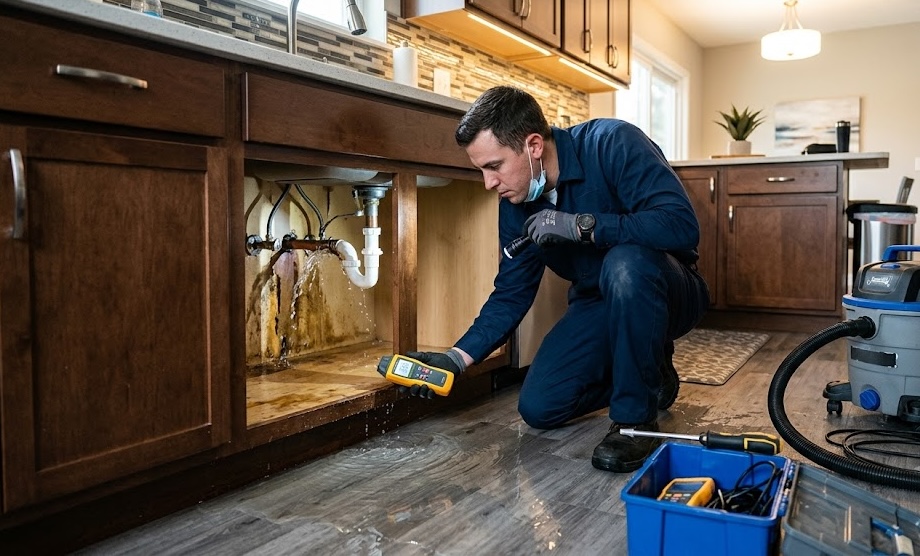
This is also the point where many homeowners realize the damage is more widespread than it first appears. Water travels. It seeps under baseboards, soaks into subflooring, and wicks up drywall long before it’s visible to the eye. A professional water damage inspection using moisture meters and thermal imaging can map exactly how far the water has spread – information that’s nearly impossible to get on your own.
The First Hour: Call for Emergency Help
Burst pipes don’t wait for business hours, and neither should your restoration team. Port St. Lucie’s humidity means mold can begin forming in as little as 24 to 48 hours after water exposure, so speed is everything.
Calling a 24/7 emergency water extraction team within the first hour gives you the best chance of saving flooring, cabinetry, and drywall that would otherwise need to be torn out and replaced. Most reputable restoration companies – including ours – offer a free inspection and can typically be on-site within 30 to 60 minutes anywhere in Port St. Lucie and the surrounding service areas.
While you wait for the crew to arrive, remove any items you can safely lift out of the water – rugs, furniture legs on blocks, electronics, and important documents. Don’t attempt to move large furniture alone, especially if it’s already waterlogged; wet furniture is heavier and more likely to cause injury than people expect.
Hours 1–3: Water Extraction Begins
When the restoration team arrives, their first priority is getting standing water out as fast as possible using industrial pumps and extraction equipment. The longer water sits, the deeper it penetrates into subfloors, baseboards, and wall cavities.
If the burst pipe was located near carpeted areas, expect a close look at whether the carpet can be saved or needs removal. Carpet and padding act like a sponge, and padding in particular often can’t be salvaged once it’s been fully saturated. Hard flooring isn’t automatically safe either – water can seep beneath tile, laminate, and hardwood, leading to warping, buckling, or a musty odor weeks later if it isn’t caught early.
Hours 3–6: Identifying Hidden Moisture
This is where a homeowner’s instinct (“it looks dry now”) and reality often diverge. Even after visible water is extracted, moisture hides inside walls, under cabinetry, and beneath flooring. Technicians use moisture meters and thermal cameras to find these pockets, because any missed moisture becomes a mold problem within days.
If the pipe break happened inside a wall or ceiling, there’s a good chance some drywall will need to be opened up or removed to fully dry the cavity behind it. This isn’t always bad news – catching it now is far cheaper than dealing with hidden mold growth six months from now. Similarly, if water crept beneath your flooring, a full assessment of whether water-damaged flooring needs removal should happen during this window, not after things “seem” dry.
Hours 6–24: Structural Drying Sets Up
Once extraction and moisture mapping are complete, the real drying work begins. Industrial air movers and dehumidifiers are placed strategically throughout the affected area to pull moisture out of walls, floors, and framing over the following 24 to 72 hours. This step, known as structural drying and dehumidification, is arguably the most important phase of the entire process – rushing it or skipping it is the number one reason mold shows up weeks later.
During this period, you’ll typically be asked to keep the equipment running continuously and avoid opening windows or doors unnecessarily, since Florida’s humidity can actually work against the drying process if outside air is allowed in.
What Happens After the First 24 Hours
By the end of day one, if you’ve acted quickly, the worst should be behind you: the source is fixed or contained, standing water is gone, and drying equipment is actively working. Over the next several days, your restoration team will monitor moisture levels, adjust equipment as needed, and confirm the space is fully dry before any repairs – drywall, flooring, painting – begin.
It’s also worth having your home checked for early mold growth once drying is complete, especially in Port St. Lucie’s climate. If you’re not sure whether an area was fully dried, it’s far better to have it inspected than to assume everything is fine.
Don’t Wait to Get Help
A burst pipe is stressful, but it’s also very manageable when you know the right order of operations: shut off the water, document the damage, call for emergency extraction, and let professionals handle moisture mapping and structural drying. The homeowners who fare best are almost always the ones who act within the first few hours rather than waiting to see how bad it gets.
If you’re facing a burst pipe anywhere in Port St. Lucie or the surrounding area, don’t wait for it to get worse. Contact our team any time, day or night, for a free inspection and rapid emergency response – because when it comes to water damage, every hour counts.
Leave a Reply