
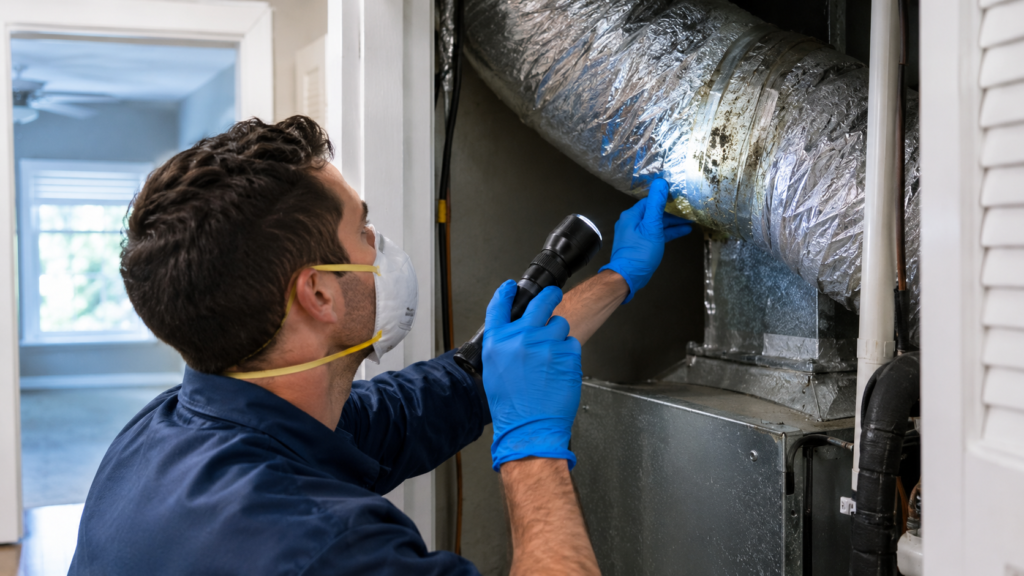
If your AC smells musty the moment it kicks on, or you spot dark staining on the attic decking, you are probably dealing with mold. In Port St. Lucie, that is far from rare. Heat, humidity, summer storms, and AC systems that run almost year-round create ideal conditions for mold in the two places homeowners rarely look: the ductwork and the attic.
This guide explains how to recognize the warning signs, what causes the problem, what you can safely handle yourself, and when it is time to bring in a professional.
Why Port St. Lucie Homes Are Prone to AC and Attic Mold
Mold needs three things: moisture, a food source, and time. Treasure Coast homes supply all three. Outdoor humidity stays high for much of the year, and attics can trap hot, moist air under the roof. Dust, insulation, wood framing, and drywall paper give mold plenty to feed on.
Your AC system adds another factor. It pulls moisture out of indoor air, and that moisture condenses on the coil, in the drain pan, and on cold surfaces of the ducts. When something goes wrong, such as a clogged drain line, leaky duct, or poor insulation, the system can become a source of moisture instead of a remedy for it.
Once a surface stays damp, mold can start growing in as little as 24 to 48 hours. That is why fast action after any leak or storm matters.
Signs of Mold in Your AC Ducts and HVAC System
Ductwork is hidden, so the clues usually show up elsewhere:
- A musty or “dirty sock” smell when the AC starts, especially if it fades once the system has been running a while.
- Visible growth or dark specks around supply vents, return grilles, or the air handler.
- Condensation or water stains on vents, ceilings near registers, or the air handler closet.
- Allergy-like symptoms that improve when you leave the house, such as sneezing, congestion, or itchy eyes.
- Dust that returns quickly after cleaning, which can mean contaminated air is circulating.
- Sweating ducts in the attic or a wet, slimy drain pan near the air handler.
If you are seeing several of these, it is worth having the system looked at. Our HVAC mold remediation and air duct mold removal services cover inspection, containment, and cleaning of the full system. If the problem is isolated to the air handler or furnace cabinet, our heating unit mold cleanup is the more targeted option.
Signs of Mold in Your Attic
Attics are easy to ignore until something goes wrong. Check for:
- Dark or fuzzy patches on the underside of the roof deck, rafters, or trusses. Black, green, white, or gray growth can all be mold.
- Stained or compressed insulation, especially if it feels damp or clumpy.
- Rusty nails or wet-looking wood, which suggest ongoing condensation.
- A damp, musty smell when you open the attic hatch.
- Water stains on ceilings below the attic, which can point to a roof or ductwork leak above.
Do not assume it is harmless surface discoloration. Wood staining and mold can look similar, and the only way to be sure is a professional assessment. If you suspect growth, our attic mold removal team can inspect the space, find the moisture source, and remove the contamination properly.
What Causes Mold in Ducts and Attics?
Mold is always a symptom of a moisture problem. These are the most common causes we see in homes around the area:
- Roof leaks:- Missing shingles, worn flashing, or storm damage let water reach the decking and insulation. This is especially common after hurricane season. Our hurricane response services and roof leak water damage mitigation address the damage left behind.
- Clogged AC condensate drain lines:- When the drain backs up, water overflows into the pan and the surrounding area.
- Poorly insulated or leaking ducts:- Warm, humid attic air meets cold duct surfaces and condenses, much like a glass of iced tea in the sun.
- Inadequate attic ventilation:- Without proper airflow, heat and moisture stay trapped under the roof.
- Bathroom or dryer vents that terminate in the attic:- instead of outdoors, which dumps humid air into the space.
- Oversized AC units:- A system that cools too fast shuts off before it can dehumidify the home, leaving indoor humidity high.
- Hidden plumbing leaks:- A slow leak near the air handler or in the ceiling can feed mold for weeks before anyone notices. A water damage inspection can pinpoint where moisture is entering.
Can You Clean It Yourself?
For a very small, clearly surface-level spot on a non-porous material, careful cleaning may be reasonable. The EPA generally suggests that areas larger than about 10 square feet are better handled by a professional, and ductwork and attics are tricky for several reasons:
- Mold inside ducts is not fully reachable with household cleaners, and spraying bleach or fragrance products can leave moisture behind.
- Disturbing growth releases spores into the home, spreading the problem to new rooms.
- Porous materials like insulation, drywall, and wood often need to be removed, not wiped.
- Without fixing the moisture source, the mold simply comes back.
When to Call a Pro
Call a professional if any of these apply:
- You see or smell mold coming from vents or the air handler.
- Growth covers more than a small patch, or you cannot tell how far it extends.
- The mold followed a roof leak, storm, flood, or plumbing failure.
- Someone in the home has asthma, allergies, or a weakened immune system.
- Mold keeps returning after you have cleaned it.
- The material looks black and widespread. Learn more about our black mold remediation and removal process.
What Professional Mold Remediation Involves
A proper job is more than scrubbing. A typical process looks like this:
- Inspection and moisture mapping to locate the source and the full extent of the contamination.
- Containment using plastic barriers and negative air pressure so spores do not spread.
- Air filtration with HEPA air scrubbers during the work.
- Removal of contaminated materials that cannot be cleaned, such as insulation or damaged decking.
- Cleaning and treatment of the ducts, air handler, and surfaces using HEPA vacuuming and appropriate antimicrobial products.
- Drying and dehumidification so the area stays dry. See how we handle structural drying and dehumidification.
- Decontamination and final verification to confirm the space is clean. Our mold decontamination service finishes the job.
If you want to know what the overall timeline looks like, our guide on what to expect from start to finish walks through the full restoration process, and our cost breakdown explains what affects pricing.
How to Prevent Mold From Coming Back
- Schedule annual AC maintenance and ask the technician to check the drain line, drain pan, and duct insulation.
- Keep indoor humidity around 30 to 50 percent. A simple hygrometer costs little and gives you early warning.
- Inspect your roof after every major storm, even if you see no leaks inside.
- Vent bathrooms, kitchens, and dryers outdoors, never into the attic.
- Fix leaks immediately. Anything that stays wet for more than a day or two is at risk.
Frequently Asked Questions
How fast does mold grow after a leak? Mold can begin to grow within 24 to 48 hours on a damp surface, which is why quick drying is critical.
Is mold in air ducts dangerous? It can be. Mold in a duct system can spread spores throughout the home and aggravate allergies or asthma. Even if it does not cause symptoms for everyone, it should be corrected.
Does homeowners insurance cover mold removal? It depends on the policy and the cause. Mold resulting from a sudden covered water event is sometimes covered, while long-term neglect usually is not. Check your policy and document everything.
Get Help Before a Small Problem Gets Bigger
Mold in your AC ducts or attic will not go away on its own, and every week of delay can mean more damage and a larger bill. If you live in Port St. Lucie or a nearby community like St. Lucie West, reach out to schedule an inspection. We will find the moisture source, explain your options plainly, and restore a clean, dry home.
Leave a Reply