
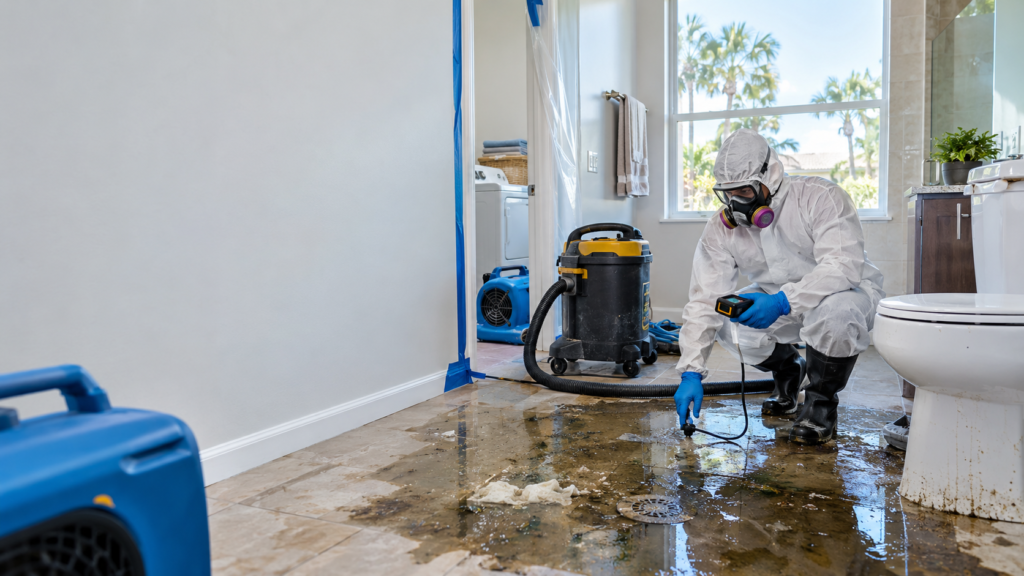
A sewage backup is Category 3 water, also called “black water.” Under the IICRC S500 standard, it is grossly contaminated and can carry bacteria, viruses, and parasites. In Port St. Lucie, don’t clean it up yourself. Keep people and pets out, turn off power to the affected area only if it’s safe to reach the breaker, and call a licensed sewage backup cleanup and sanitation team right away.
What does “Category 3 water” actually mean?
Restoration professionals sort water damage into three categories based on contamination:
- Category 1: Clean water from a supply line or sink, with low risk at first.
- Category 2: “Gray water” from washing machines or dishwashers, which can make people sick.
- Category 3: Sewage, toilet backflow from beyond the trap, and floodwater. This is severely contaminated.
Water also gets worse with time. Clean water left standing can slide from Category 1 to 2 or 3 within about 48 hours. Sewage, however, is Category 3 from the first second. There is no “mild” version of it.
What causes sewage backups in Port St. Lucie homes?
From the calls we handle across St. Lucie County, the common causes are:
- Clogged main sewer line from grease, wipes, or tree roots. [Add your real top causes from job records.]
- Heavy rain and tropical storms that overload the sewer system or raise the water table. Our hurricane response services and emergency storm cleanup teams see backups spike after major storms.
- Failing septic systems on properties outside the city sewer service.
- Collapsed or cracked lateral lines between the house and the main.
- Repeated toilet overflows that point to a deeper blockage. If this is happening, read about toilet overflow cleanup and plumbing overflow cleanup.
If you’re on city sewer, a blockage in the main may be the utility’s responsibility, while the line from your house to the main is usually yours. Septic systems are always the owner’s. Check with your provider and a licensed plumber.
Why is sewage cleanup not a DIY job?
Mopping it up and dousing the floor with bleach feels like the right move. It isn’t, for four reasons.
1. The health risk is real:- Sewage can carry E. coli, Salmonella, norovirus, hepatitis A, and parasites like Giardia. Contact through skin, eyes, or inhaled mist can cause illness. Children, older adults, pregnant people, and anyone with a weakened immune system are most at risk.
2. Porous materials can’t be truly cleaned:- Carpet, carpet pad, drywall, insulation, and unsealed wood absorb contaminated water. Surface cleaning leaves contamination inside the material. Professionals usually remove and dispose of these items, such as carpet, drywall, and wet insulation, then clean and treat the structure underneath.
3. Contamination spreads where you can’t see it:- Foot traffic, wet shoes, and household fans carry contaminated water and airborne particles into clean rooms. A box fan can turn a one-room problem into a whole-house problem.
4. Odor and mold follow if drying is incomplete:- In Florida’s humidity, hidden moisture behind baseboards and under flooring invites mold within 24 to 48 hours. A shop vac and a few fans can’t confirm that a structure is dry.
What should I do in the first hour after a sewage backup?
- Stay out of the affected area. Keep children and pets away.
- Stop using water. Don’t flush, run the dishwasher or washing machine, or use sinks and showers. More water means more backup.
- Turn off electricity to wet areas only if the breaker panel is in a dry location. If water is near outlets or the panel, leave it and call a professional.
- Don’t mix cleaning chemicals. Mixing bleach with ammonia-based products creates toxic gas.
- Take photos and video of the damage before anything is moved.
- Call a licensed sewage cleanup company and your insurance company.
How do professionals clean up a sewage backup?
Every job differs, but a proper process looks like this: [adjust to your real workflow].
- Safety setup: Technicians wear protective equipment such as gloves, boots, goggles, and respirators, and contain the affected zone.
- Inspection and moisture mapping: We use [moisture meters and thermal imaging cameras] to find where the water went, including behind walls and under floors. See what inspectors look for in our guide to water damage inspection in Port St. Lucie.
- Extraction: Contaminated water is removed with [pumps and extractors].
- Removal of unsalvageable materials: Porous materials touched by sewage are cut out and bagged for proper disposal.
- Cleaning and disinfection: Hard surfaces and framing are cleaned, then treated with antimicrobial products.
- Structural drying: Using air movers and dehumidifiers, structural drying and dehumidification continues until readings reach dry standards, not just until it “feels dry.”
- Odor control: Lingering sewage odors need more than air fresheners. Our deodorization services treat the source.
- Documentation: Photos and moisture logs are provided for your insurance claim.
Can mold grow after a sewage backup?
Yes. Sewage adds moisture and organic material, and both feed mold. If materials stay damp, mold can start within 24 to 48 hours. If you notice a musty smell or discoloration days later, a mold inspection and testing visit can confirm it. If mold is found, mold remediation services and post-remediation clearance testing show the problem is resolved. Florida also has licensing rules for mold assessors and remediators, so verify any provider’s credentials.
Does insurance cover sewage backup in Florida?
Often only partly. Many standard homeowners policies exclude sewer or drain backup unless you’ve added a water backup endorsement. Flood insurance typically covers rising surface water, not a backed-up drain. Because policies vary, read yours and report the loss promptly. We document the damage thoroughly, but we’re not adjusters or attorneys, and your insurer makes coverage decisions.
How long does sewage cleanup take?
Extraction and removal can often be done in one day. Drying and deodorizing usually take [3 to 5 days], and rebuilding takes longer if drywall or flooring is replaced. Larger events, like those after a storm, can take longer. For the full timeline, read what to expect from start to finish.
Frequently asked questions
Is a sewage backup an emergency?
Yes. Contamination spreads and health risk rises the longer it sits. Call right away.
Can I clean sewage backup with bleach?
Bleach doesn’t penetrate porous materials, and mixing it with other cleaners can be dangerous. Contaminated carpet, pad, and drywall usually need removal.
Is sewage backup the same as flood damage?
No. Both are Category 3, but the cause and the response differ, and insurance treats them differently. See our flood damage cleanup page.
How fast can you get to me?
We respond 24/7 and typically arrive within 30 to 60 minutes in Port St. Lucie.
Do you serve my neighborhood?
We serve all of Port St. Lucie, including St. Lucie West, Tradition, and River Park. See all areas we serve.
Sewage backup in your home right now?
Don’t wait and don’t DIY. Call (772) 218-9124 for 24/7 emergency sewage cleanup in Port St. Lucie, or request a free quote. Browse all our water damage restoration services, or see the Port St. Lucie water damage restoration homepage.
Leave a Reply