
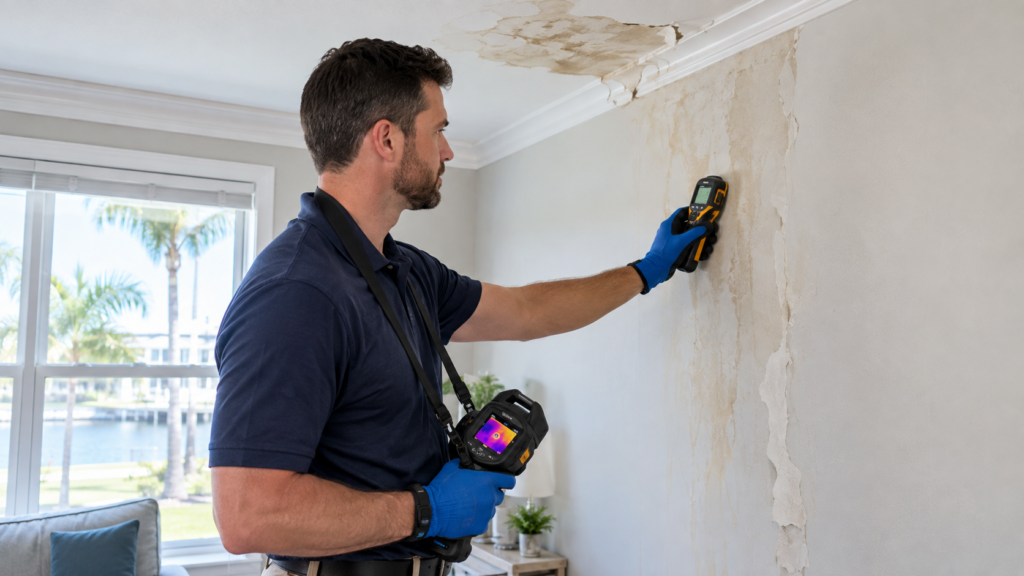
Water damage rarely announces itself with a burst pipe and a flooded living room. In Port St. Lucie, it’s more often a faint musty smell in a closet, a ceiling stain that keeps coming back, or a floor that feels slightly soft near the bathroom. By the time the damage is obvious, moisture has usually been working behind the walls for days or weeks.
That’s why a professional water damage inspection is the first step in any restoration. Below, we walk through what inspectors check, the tools they use, how they classify what they find, and what you should receive at the end.
Why Water Damage Inspections Matter in Port St. Lucie
Southeast Florida is one of the toughest climates in the country for moisture. High humidity, heavy summer downpours, hurricane season, and air conditioners that run nearly year-round give water more ways into a home. They also give mold more reasons to thrive. Mold can begin growing within 24 to 48 hours on damp, organic materials such as drywall and carpet padding.
Many local homes are built on concrete slabs with plumbing running beneath or inside walls, and stucco exteriors and tile roofs can hide slow leaks for a long time. A thorough inspection finds both the source and the full extent of the problem, so you repair it once instead of chasing stains for months.
Signs You Need a Water Damage Assessment
You don’t need a flooded floor to justify an inspection. Call for a water damage assessment if you notice any of these:
- A musty or earthy odor that doesn’t go away
- Yellow, brown, or ring-shaped stains on ceilings or walls
- Peeling paint, bubbling wallpaper, or drywall that feels soft
- Warped baseboards, buckling laminate or hardwood, or lifting tile
- A higher water bill with no change in how you use water
- Visible mold or dark spots around windows, AC vents, or bathrooms
- A recent storm, roof leak, plumbing failure, or AC drain overflow
Even one of these is worth checking. Confirming a small problem is almost always easier than discovering a large one later.
What Inspectors Check During a Water Damage Inspection
A quality inspection is systematic. Here is what a trained technician typically covers.
1. Visual Survey of Affected Areas
The inspector starts with what can be seen: walls, ceilings, floors, baseboards, cabinets, and the areas around windows and doors. They look for staining patterns, discoloration, bubbling, and rust on fasteners. On masonry they look for efflorescence, the white powdery residue left when water moves through concrete or block. They also watch for fresh paint or patches that may be covering an older leak.
2. Moisture Meter Readings
Pin and pinless moisture meters measure the moisture content of drywall, wood framing, subflooring, and flooring. The inspector compares readings against a dry reference point elsewhere in the home. This produces a moisture map showing how far water has traveled beyond what you can see.
3. Thermal Imaging
Infrared cameras reveal temperature differences that can indicate moisture behind a surface. A thermal camera doesn’t measure moisture directly, so a careful inspector uses it to find suspicious areas and then confirms them with a meter.
4. Humidity and Air Conditions
Hygrometers measure relative humidity, temperature, and dew point. Elevated indoor humidity can point to hidden moisture. It also affects how well drying equipment will work later.
5. Finding the Water Source
Fixing the damage without fixing the source only invites a repeat. Inspectors check supply and drain lines, water heaters, and appliance connections such as dishwashers, washing machines, ice makers, and refrigerator lines. They also check toilets, tub and shower pans, roof penetrations and flashing, windows, and AC condensate lines and drain pans. If a hidden plumbing problem is suspected, pipe leak detection and cleanup helps pinpoint the exact location before walls are opened.
6. Structural and Hidden Areas
Water travels. A leak in one room can saturate framing and insulation several feet away. Inspectors check wall cavities, the attic, slab edges, and any under-house or crawl space areas. Damage below the floor is common after plumbing failures, so subfloor and under-house leak repair is often part of the follow-up. Roof leaks and AC overflow may point to attic mold or moisture in the HVAC system.
7. Mold Indicators
The inspector notes any visible growth and conditions that favor it, such as persistent humidity, damp insulation, and musty odors. If mold is suspected, they will recommend the appropriate next step, whether that’s mold decontamination or black mold remediation.
How Inspectors Classify Water Damage
Restoration professionals follow the IICRC S500 standard, which classifies water damage in two ways. The classification decides how the job is handled and how quickly work must start.
By contamination (category):
- Category 1: clean water from a broken supply line or sink overflow
- Category 2: significantly contaminated water, such as washing machine or dishwasher discharge
- Category 3: grossly contaminated water, including sewage and rising storm or floodwater, which requires specialized gross filth cleanup
Clean water can degrade to a higher category the longer it sits, which is why early inspection matters.
By evaporation load (class):
- Class 1: a small area, with little material absorbing water
- Class 2: an entire room affected, with carpet, padding, and lower walls wet
- Class 3: water from above, saturating ceilings, walls, and insulation
- Class 4: deeply held moisture in dense materials such as hardwood, plaster, or concrete, which needs specialty drying
What You Should Receive After the Inspection
A useful inspection ends with clear documentation, not just a verbal opinion. Expect:
- Moisture readings and a map of affected areas
- Photos of damaged and at-risk materials
- The identified or suspected source of the water
- The category and class of the loss
- A list of materials to dry, remove, or replace
- A recommended scope of work and estimated drying timeline
This documentation also supports your insurance claim. Ask the inspector to explain findings in plain language, and review our guide to what to expect from start to finish so nothing surprises you. For budgeting, see the cost of residential water damage restoration in Port St. Lucie.
Water Damage Inspection vs. General Home Inspection
A general home inspection is a broad, mostly visual review of a property’s condition. It can flag stains or musty smells, but it isn’t designed to map moisture inside walls or subfloors. A water damage inspection focuses on moisture and uses specialized tools.
Buyers should consider one on top of a standard home inspection if a property shows any signs of past leaks. It’s also worth scheduling after any storm event. Our hurricane response services cover storm-related damage, and our guide on how heavy rainfall floods homes in Port St. Lucie explains how to reduce the risk.
How to Prepare for the Inspection
- Write down when you first noticed the problem and anything that may have caused it.
- Take photos of stains, damage, and affected belongings.
- If there’s an active leak, shut off the water at the main valve.
- If it’s safe to do so, turn off electricity to wet areas.
- Move valuables and furniture away from damaged areas.
Frequently Asked Questions
How long does a water damage inspection take?
A typical home is often assessed within an hour or two. Larger properties or damage spread across several areas take longer.
Does insurance cover a water damage inspection?
That depends on your policy and the cause of the loss. The inspection report can support a claim, so check with your carrier early.
Can I inspect for water damage myself?
You can spot visible signs like stains, odors, and warped materials. Hidden moisture in walls, ceilings, and subfloors requires meters and thermal imaging to find and measure.
Schedule a Water Damage Inspection in Port St. Lucie
Whether the problem is a stubborn ceiling stain or the aftermath of a storm, an early inspection protects your home and gives you a clear repair plan. We serve homeowners across the city, including St. Lucie West, Cascades at St. Lucie West, and Central Park. Contact us today to book your inspection.
Leave a Reply